Need ac installation and replacement in Arlington?
- Request an estimate in a few minutes
- Compare written quotes before you decide
- Work planned around your family's schedule
- No obligation
No obligation
Arlington AC repair and HVAC help, made simple
Request an estimate
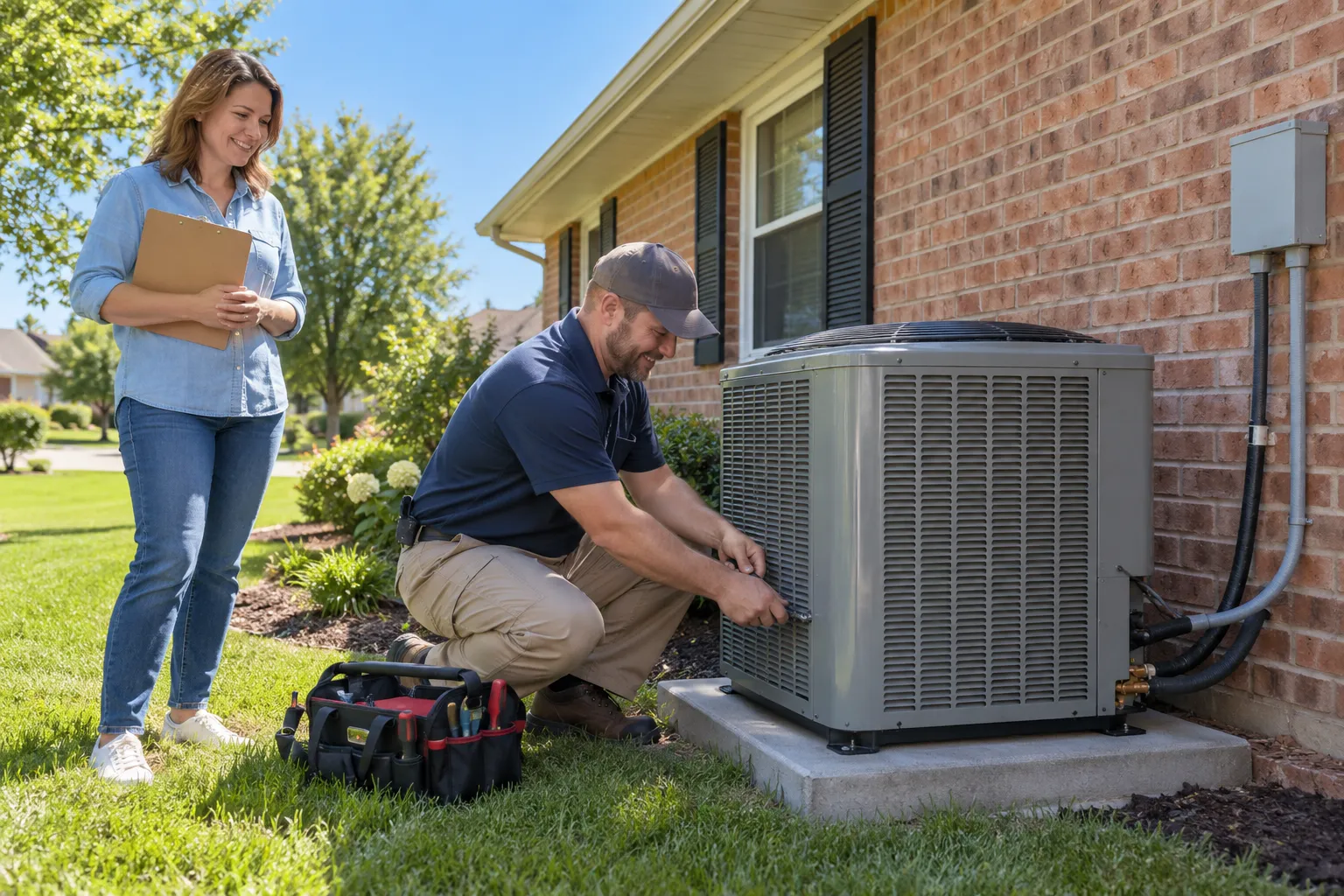
A new air conditioner is a big purchase, and it rarely comes at a good moment. Maybe the old unit keeps breaking down. Maybe the house stays sticky even with the system running all day. Nasasale Heating & Air helps busy households in the Arlington area cut the searching and get moving.
You share what is going on and ask for an estimate. Nasasale Heating & Air then connects you with an independent local provider who can look at your home and put a price in writing. The provider does the work, not Nasasale Heating & Air. You compare, ask questions and choose a plan and a start day that fit around family. Quote before commitment.
When cooling fails in the middle of a hot, humid stretch, the first question is simple. Fix it or replace it? Both cost money. The answer depends on the age of the unit, its repair history and what the fix would cost next to a new system.
Many providers use a rough rule. If a repair is close to half the price of new equipment and the unit is past 10 to 12 years old, replacement deserves a serious look. Ask for both numbers in writing.
One sign alone may be a small fix. Several together usually point toward replacement.
Long cooling seasons mean long run times. Add very hot attics, heavy downpours and tropical storm season, and equipment takes a beating. Outdoor units deal with power surges, debris and standing water. Attic air handlers and ducts fight extreme heat all summer. A system that runs most of the year can age faster than the calendar suggests.
Each one has trade-offs in price, upkeep and layout. Ask the provider why they suggest one over another.
Bigger is not better. An oversized unit cools fast, shuts off, and leaves the air clammy. That short cycling wears parts and wastes power. An undersized unit runs all day and still struggles.
A careful provider measures the home and checks insulation, windows and sun exposure. Then they run a load calculation. Be wary of anyone who just copies the size of your old unit.
Scope differs from quote to quote, so read each one closely. Typical items are:
In many slab-on-grade ranch homes, the air handler sits in a very hot attic. That makes duct condition just as important as the new unit. Older pier-and-beam houses can have tricky duct routes or tight spaces.
Indoor and outdoor parts should be rated to work together. Mismatched parts can cut performance. Leaky ducts can also waste a good share of the cooling you pay for.
Efficiency is shown with a SEER rating. A higher number means less electricity for the same cooling. It also means a higher price up front. With a long cooling season, the savings add up faster, so a higher rating may pay off sooner.
Ask the provider to show the added price next to the estimated yearly savings. Then decide what makes sense for your budget. Ask about rebates or utility programs too. Availability varies.
Many replacements take about one to two days, and bigger jobs can take longer. Tell the provider about school runs, work calls, pets and nap times. Ask for an arrival window and what the plan is while the power is off.
In summer, ask how to keep the house tolerable during the work. Pick a start day with some buffer. Fit around family.
Request a callback to check provider availability and ask about a start window.
Get two or three if you can. Line them up side by side: equipment, size, warranty, scope and extras. A price far above or below the others deserves a question, not a quick yes. Hold off on a large deposit until you have read the contract.
The goal is a fair price for the work you actually need. Less searching, more cooling.
The provider takes out the old equipment and disposes of it, if that is listed in the written quote.
Outdoor unit and indoor coil or air handler, sized to your home and your budget.
Refrigerant lines, electrical hookups, drain line and thermostat are connected and checked.
The provider starts the system, tests cooling and shows you the basics.
Prices vary by home size, equipment type, duct condition and local rules. These are typical U.S. ranges only. Get a written quote from the provider before you agree to any work.
| Item | Typical range | Notes |
|---|---|---|
| Central AC replacement | $5,000 – $12,000 | Depends on size, efficiency and brand |
| Heat pump system | $6,000 – $14,000 | Cools and heats; ducts may add cost |
| Ductless mini-split (one zone) | $3,000 – $6,500 | More zones raise the price |
| Duct repair or sealing | $500 – $2,500 | Common in hot attics and older homes |
| Thermostat upgrade | $150 – $500 | Smart models cost more |
| Permit, disposal and electrical | $300 – $2,500 | Varies by local rules and wiring needs |
Tell us about your home, your current system and what is not working.
Send your details through the form. There is no obligation to hire anyone.
Nasasale Heating & Air connects you with an independent provider in your area.
Review written quotes, ask questions and pick a plan and start day.
Share your needs once and get matched with an independent local provider.
Request an estimate and compare written numbers before you commit.
Ask providers about arrival windows that work around school and work.
Line up scope, equipment and warranty so price differences make sense.
Look at age, repair history and cost. If the unit is over 10 to 12 years old and the repair is expensive, ask for both quotes.
Many replacements take about one to two days. Larger jobs, duct changes or new wiring can take longer. Ask the provider for a timeline in your written quote.
Typical U.S. prices run from about $5,000 to $12,000, depending on size, efficiency and ductwork. Get a written, itemized quote from a local provider before you decide.
Tell us what your system is doing and request an estimate. A provider in our network can follow up to talk through next steps.
No obligation